

Why do discriminatory covenants still appear in records?

Although discriminatory covenants have been legally unenforceable since the U.S. Supreme Court ruling in Shelley v. Kraemer (1948) and became illegal under the Fair Housing Act of 1968, they can still be found in older recorded documents. These restrictions once prevented people, particularly those excluded because of their race, color, religion, age, or national origin from buying, renting, or living in certain properties.
California law addresses discriminatory covenants
Starting July 1, 2022, Assembly Bill 1466 (McCarty) requires California Recorders, and others, to prepare and record modifications for documents that include discriminatory restrictions.
What the modification does:
- Clarifies that the discriminatory restriction is legally void.
- Includes the original restriction, which is fully redacted.
- Leaves the original document unchanged, but adds a modification into the permanent public record.
Discriminatory restrictions may be based on:
- age
- race
- color
- religion
- sex
- gender
- gender identity
- gender expression
- sexual orientation
- familial status
- marital status
- disability
- veteran or military status
- genetic information
- national origin
- source of income as defined in Section 12955 of the Government Code
- ancestry
Our Process
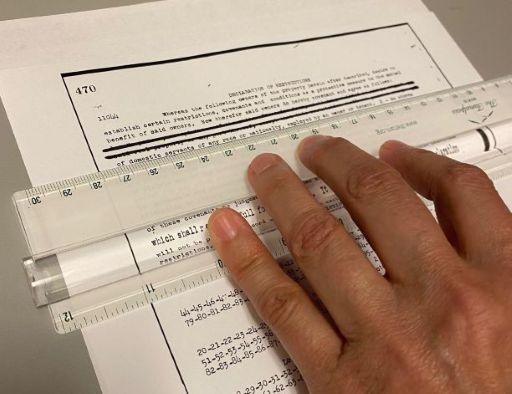
The Marin County Recorder’s Office has reviewed thousands of recorded Covenants, Conditions, and Restrictions (CC&Rs) and other property documents, such as deeds, to locate discriminatory language.
When such language is found, Recorder’s Office staff:
- Prepare a Restrictive Covenant Modification coversheet;
- Print a copy of the previously recorded document and redact such language;
- Send a Restrictive Covenant Modification to be reviewed and approved by the Marin County Counsel’s Office;
- Record the Restrictive Covenant Modification.
No additional fee:
Although AB 1466 allows county recorders to charge an extra $2 recording fee, the Marin County Recorder’s Office is not collecting this additional fee at this time.
Our Interactive Map

In collaboration with the Marin County Geographic Information Systems (GIS) team, the Restrictive Covenants Time Progression page includes interactive, time-lapse maps and graphs with restriction and modification updates. One of the features, which is shown in a snapshot above, is a dashboard that displays parcels with restrictive covenants that have been currently identified, redacted, or pending redaction. The data is updated regularly, so the information in the snapshot may have changed.
Marin's Restrictive Covenant Project Earns State and National Awards

In 2022, the California State Association of Counties (CSAC) bestowed a Challenge Award to Marin’s Office of the Assessor-Recorder-County Clerk (ARCC) for the work on Restrictive Covenant Project, designed to redact racist restrictions in real estate documents that prohibit the purchase, lease, or occupation of property to people of color.
CSAC honored 19 programs from 14 counties after reviewing 370 entries in its annual recognition competition. Marin ARCC was one of 18 programs earning Challenge Awards.
Later, in 2023, the project earned Best in Category for Community and Economic Development from the National Association of Counties (NACo). The award recognized the collaborative efforts on the process across Marin County departments.
Getting Involved
To learn more about protections against housing discrimination, visit the Marin County Fair Housing website.
You can read more about our process on the Restrictive Covenant Identification and Redaction Plan page.
To see how the County of Marin is working to address racially restrictive covenants, watch this short video produced by the Marin County Public Information Team, also featured below.
How do I find a copy of my Covenants, Conditions, and Restrictions?
The easiest way to find out which Covenants, Conditions, and Restrictions (CC&Rs) apply to your property is to review the title report you received when you bought your home.
If your title report mentions recorded CC&Rs but didn’t include a copy:
- You can view the recorded document in person at the Marin County Recorder’s Office.
- You may purchase a copy while you're in the office or online.
If there’s no clear reference to the CC&Rs in your title report:
- Check the legal description on your deed. It may reference a recorded map or subdivision name.
- If your property is part of a subdivision with CC&Rs, the Recorder’s Office may have already located the applicable restrictions.
Did you find discriminatory language in a property record?
You may prepare a Restrictive Covenant Modification. Here’s what to include:
- A Restrictive Covenant Modification coversheet
- A complete a copy of the previously recorded document with the illegal language unredacted
- An additional copy of the page with the illegal language redacted
The Recorder's Office will send the modification to be reviewed and approved by the Marin County Counsel’s Office. The modification will then be recorded at no fee.
The Marin County Recorder’s Office has already reviewed many recorded restrictions and may have identified those affecting your neighborhood.
More Questions?
Please contact the Marin County Recorder's Office if you have questions about:
- Recording a Restrictive Covenant Modification
- The status of a specific subdivision
- Marin County's progress under AB 1466
Related
- Restrictive Covenant Project This initiative sheds light on the historical significance of governmental policies and programs intentionally designed to discriminate, which consequently led to the creation of segregated communities within Marin.
-
Marin County's restrictive covenant identification and redaction plan
This document provides the background, goals and department's plan to accomplish its directive of locating and redacting all illegal discriminatory real property restrictions in the county.
-
Restrictive Covenant Modification cover page
The Marin County Recorder’s Office is taking a proactive approach to locating and reviewing recorded CC & Rs (Covenants, Conditions, and Restrictions) for each subdivision in Marin County and recording modifications for those that contain discriminatory language.